
While electricity prices are taking a toll on many businesses, dynamic electricity tariffs and time-of-use grid charges offer considerable savings potential. Cleverly combining spot market prices, demand-side response and battery storage can help avoid peak-load periods and take advantage of low-price opportunities. Savings can reach 20 percent or more.
Europe’s energy system is becoming greener – and increasingly volatile. With the growing proportion of renewable energies, price and load structures are shifting. This does not just pose a risk for businesses; it also provides them with the opportunity to leverage market fluctuations and profit from low-price periods through dynamic electricity tariffs based on spot market prices.
Dynamic tariffs replace a fixed commodity price with a wholesale price that is tied to the European power exchange’s day-ahead market, EPEX Spot, and is updated every 15 minutes. Day-ahead means that prices are negotiated for the following day, and depend on supply and demand. For example, low electricity demand at night or large amounts of solar power being fed into the grid at midday cause prices to drop. That means that consumers pay a different price depending on the time of day and market situation. This approach is especially effective when combined with an intelligent energy management system and battery storage, so that charging takes place during low-price periods, and the release of energy when the prices are high; this is how electricity costs are minimized.
In April 2025, time-of-use grid charges were introduced in Germany as a further price lever. This system is based on three tariff levels set by the grid operator, which makes pricing variable, but rigid at the same time, because it sets fixed time periods. This system is seen as a first step towards the quarter-hourly dynamic grid charges that the German Federal Network Agency would like to introduce through the AgNes proceedings (AgNes stands for: Analysis of the transformative potential of new charge structures).
The German Electricity Network Charges Ordinance (StromNEV, section 19) for businesses with atypical grid usage offers additional savings potential. Each year, distribution system operators determine the high-price peak-load periods based on when the grid is particularly overwhelmed. If consumers shift their annual peak load outside of these times, they can negotiate a reduced individual grid charge to reduce both their market and their grid costs. Combining these mechanisms with optimization at a local level, such as smarter solar self-consumption or peak shaving, unlocks the full savings potential. This approach gives rise to holistic energy management that reduces costs, eases grid pressure and is economically viable.
Businesses combine a convenient dynamic electricity tariff with a high-performance electricity connection that uses consumption metering (registrierende Leistungsmessung, RLM), the recording of electricity consumption at 15-minute intervals. In Germany, this is already standard for businesses whose annual consumption exceeds 100 MWh. As a next step, additional modules can be added, for example, a battery storage system, charging infrastructure for electric vehicles or solar self-consumption optimization.

This keeps the barrier to entry low and the initial investment manageable, while each additional module increases the financial benefit. Intelligent software integrates all the components, and a local control unit records generation and consumption in real time while controlling battery storage and charging infrastructure completely automatically, based on price and load signals. Optimization happens continuously in the background, without the need for manual control and without impacting internal processes like manufacturing.
According to Frank Blessing, Managing Director of Coneva, today’s market is very fragmented. Specialized providers for dynamic tariffs, peak shaving or local energy management systems exist; “but only a few companies offer an integrated solution combining these elements.” The smartest way to maximize financial returns is by integrating dynamic tariffs, storage, and energy management, though. “Integrating all these components is essential for the perfect coordination of market prices, grid charges and local load profiles to achieve maximum cost savings,” explains Blessing.
Companies are looking primarily for measurable savings with minimal operational effort. What we need are integrated, comprehensive solutions for the automatic, smart control of dynamic electricity tariffs, battery storage systems and charging infrastructure at no extra effort for operators.
Such approaches can offer significant benefits for production plants and commercial locations with predictable load profiles. The supply is enabled through the combination of a dynamic electricity tariff and a profit-sharing model, where the service fee is directly tied to the achieved savings. This minimizes the investment risk and significantly reduces the initial cost.
The model is particularly suitable for sites with an annual consumption of 100 MWh or more. Logistic centers are a typical case. Trucks parked overnight or between tours have controllable – often high – charging capacity, which makes their batteries valuable providers of flexibility. If combined with a stationary battery storage system, businesses can cap their peak loads, avoid expensive peak load windows and systematically benefit from periods of cheap market prices.
Manufacturing sites with high energy demand and predictable load profiles can achieve a similar effect. They, too, can profit from intelligent control – though the specific savings potential depends on location, load profile and available flexibility. Savings depend on two factors: the company’s use of low-price periods for its electricity procurement and avoiding peak loads, which lowers grid charges.
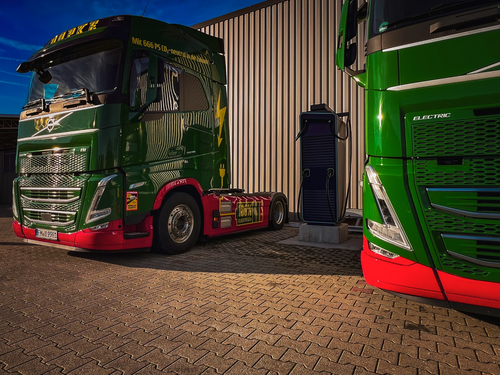
Döpke’s Coneva project shows just how effective such measures can be: A photovoltaic system with 430 kW peak power, battery storage with 400 kWh capacity and two electric trucks with fast charging points are coordinated by a smart central energy management system. In a similar project, electricity costs fell by around 20 percent through a mix of self consumption optimization, peak shaving, dynamic electricity procurement and a targeted shift of the annual peak load.
Billing dynamic tariffs is complex because utility companies use a predominantly manual process. The Swiss company Exnaton has created a software platform for utility companies, which bills complex electricity products for end customers – automatically and compliantly. The software is interesting for utility companies that are developing dynamic tariffs for business customers and require a secure end-to-end solution for processing spot prices, grid charges, levies and special items like individual grid charges according to section 19 of the StromNEV.
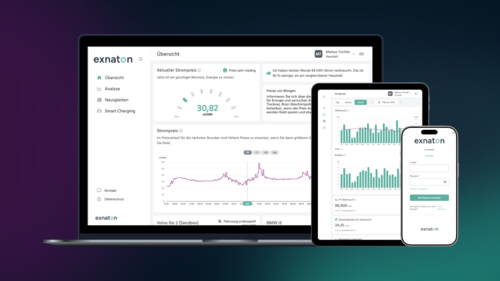
Studies have proven and experience has shown that dynamic tariffs can save customers between 10 and 30 percent on energy and grid costs. Fabian Stocker, Head of Key Account Management at exnaton, illustrates this with a simplified example: Today an SME with an annual peak load of 100 MWh, an average energy price of 25 euro cents per kWh and grid charges of 10 euro cents per kWh will pay around 35,000 euros in electricity costs per year; reducing this by 20 percent would save a whopping 7,000 euros.
Several European countries already apply time- or power-dependent grid charges. The Netherlands apply a largely power-dependent system; the UK uses Time of Use tariffs while Spain and the Scandinavian countries are shifting towards time-dependent models.
Germany is a regulatory trailblazer, with Section 19 of the StromNEV and Section 14a of the Energy Industry Act (EnWG) embedding flexibility mechanisms into law. Base rate signals and peak load windows are gaining importance Europe wide and are becoming increasingly relevant for businesses with predictable load profiles.
Switzerland is making energy costs and parts of its grid charges gradually dynamic through capacity-dependent components, time-of-use commodity prices and new dynamic grid tariffs or blanket tariffs. Axpo’s daughter company, CKW, is introducing them in 2026 with a comprehensive smart meter rollout across their coverage area.
Within the EU, Directive 2019/944 on the common rules for the internal market for electricity requires that grid tariffs incentivize flexibility and prevent double burdens. SmartEn and FTI Consulting published a roadmap for cost-covering grid structures, which emphasizes that grid tariffs should more accurately reflect system costs and ease the burden on flexible consumers in the future. A growing range of dynamic energy and grid products is becoming available for commercial customers all over Europe – a clear sign that flexibility should be considered an economic resource.
At the EM-Power Europe Conference on June 22 and 23, 2026 in Munich, you can take a deeper dive into the topic of flexibility in industry and commerce. Join the session “Turning Industrial and Commercial Demand Side Flexibility into Value” on Tuesday, June 23, to discuss with international industry experts how grid operators can integrate flexibility into their daily operations.