The commercial and industrial (C&I) sector’s energy strategy is being defined by the economic disparity between purchased electricity and self-supply: While the German Association of Energy and Water Industries (BDEW) reports electricity prices of around 14–16 euro cents/kWh for German industrial customers, Fraunhofer ISE estimates the levelized cost of energy for large-scale rooftop PV systems at 5.6 to 12 euro cents/kWh. Data from the Bundesnetzagentur confirms that photovoltaics has become the backbone of Germany’s energy supply: with a share of around 18 percent of the power mix, it surpassed fossil fuels such as natural gas or lignite for the first time in 2025. Driven by this market growth, systemic integration is now becoming a strategic focus for companies too: Only by combining high-performance storage systems with intelligent load management can companies precisely align low-cost generation peaks with industrial load profiles and achieve long-term planning certainty. From June 23 to 25, 2026 Intersolar Europe will showcase pioneering solutions to these problems at Messe München. As the world’s leading exhibition for the solar industry, it will showcase the latest technologies and business models for the C&I sector as part of The smarter E Europe, Europe’s largest alliance of exhibitions for the energy industry. Around 2,800 exhibitors will present their innovations; organizers expect more than 100,000 visitors.
From significantly lowering operating costs and reducing grid charges to precisely managing their own load profiles – solar solutions offer numerous advantages for the commercial and industrial (C&I) sectors. This enables companies to strengthen their competitiveness while also contributing to grid stability. For example, PV systems can be installed on factory or office buildings, warehouses and carports, and they can be intelligently combined with battery storage, charging stations and heat pumps.
Technological innovations are driving this development. Modern flat, lightweight and frameless silicon-cell modules reduce weight by up to 70 percent, making it possible to utilize roofs that previously remained unused due to limited load-bearing capacity. Another trend is the increasing functional and technical integration of inverters and battery storage systems, which increases the efficiency of the systems and ensures a secure energy supply. Companies that also use solar power directly for thermal processes or their own e-fleets maximize self-consumption and, in turn, overall return on investment.
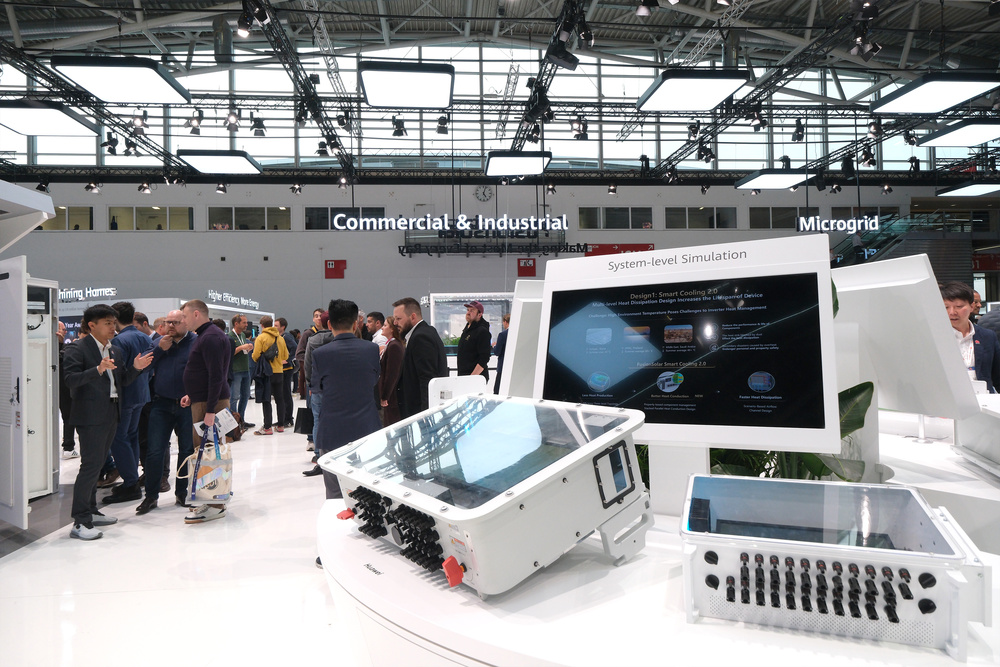
Market growth for commercial solar systems will be driven significantly by regulatory requirements in the coming years. The European Union (EU) established a key regulatory framework through the revised Energy Performance of Buildings Directive (EPBD). The goal is to gradually make the existing building stock “solar-ready”. The Directive sets out a binding timeline: Starting in 2027, the solar mandate will apply to all new public and non-residential buildings with a floor area exceeding 250 sqm. From 2028, the mandate will extend to existing non-residential buildings undergoing major renovations; from 2030, it will also apply to all new residential buildings and adjacent covered parking areas. In Germany, this European requirement necessitates an amendment of national law, which must be implemented by May 2026 at the latest. To date, the legal framework remains fragmented, as legislative authority largely rests with the federal states. While federal states such as Baden-Württemberg, Bavaria or Hamburg have already established extensive installation requirements for new commercial buildings and, in some cases, for roof renovations on existing structures, other federal states have so far only introduced a mandate for public buildings, or have not yet finished the planning process.
Not just rooftops, but other sealed areas are receiving more and more attention. E-mobility combined with solar carports is emerging as a key driver for the C&I segment, with France taking on a pioneering role. Since 2023, the APER law has been obliging operators of outdoor parking lots larger than 1,500 sqm to cover at least half of the area with PV modules. A legislative amendment in 2025 also permitted solutions incorporating greenery or the generation of equivalent amounts of renewable energy elsewhere. In Germany, the federal states are actively pursuing this trend. Numerous state building codes already require solar carports for newly constructed large parking lots, with thresholds typically ranging between 25 and 50 parking spaces depending on the region. These regulations are intended to unlock additional generation capacity without further land use while simultaneously providing weather protection for vehicle fleets. This opens up a substantial market for the solar industry in retail, logistics and corporate parking lots.
Intersolar Europe focuses on market-ready technologies and new business models for the commercial and industrial sector. The event begins with the Intersolar Europe Conference, which starts one day before the exhibition opens with dedicated sessions about the economic framework conditions and technical requirements for large-scale PV projects. Accompanying the exhibition, the Intersolar Forum (hall A3) on June 23 will offer practical insights into the synergies between PV, storage and fleet management. On June 25, the International Solar Energy Society, German Section (DGS) will examine specific C&I applications in greater depth. In addition, the special exhibit Renewables 24/7 (hall C5) will showcase how the intelligent integration of generation, storage and load management optimizes self-consumption in commerce and industry. Visitors will see firsthand how integrated systems guarantee supply security and unlock new revenue streams through sector coupling.